


Could Wasian Children Have Unique Advantages for Developing High Intelligence in a Globalized World?

By Linh Hoang, father & co-founder
As the father of a Wasian son, I have spent a lot of time thinking about a question that I suspect many multicultural parents quietly ask themselves.
What kind of future might our children have because of where they come from?
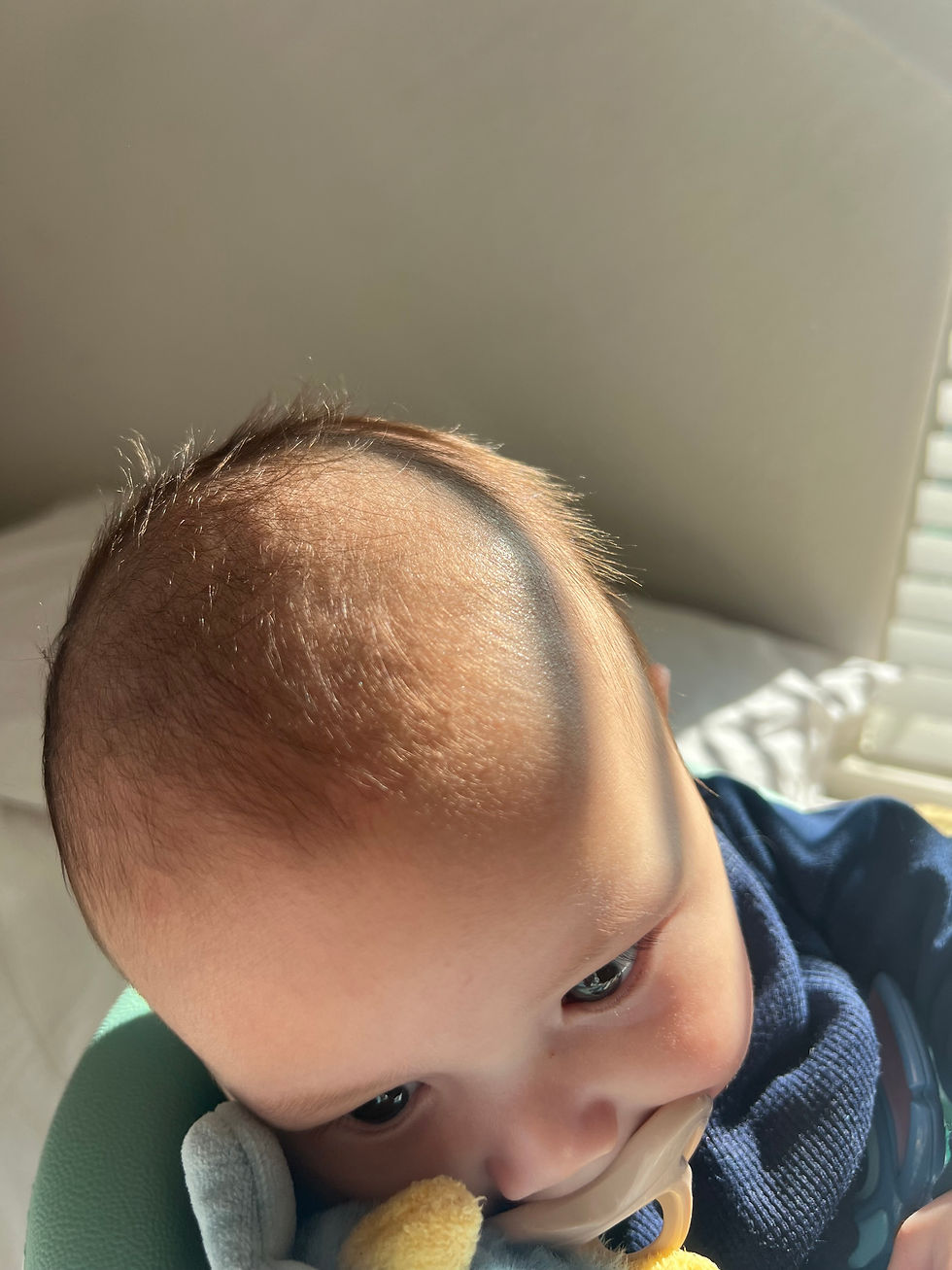
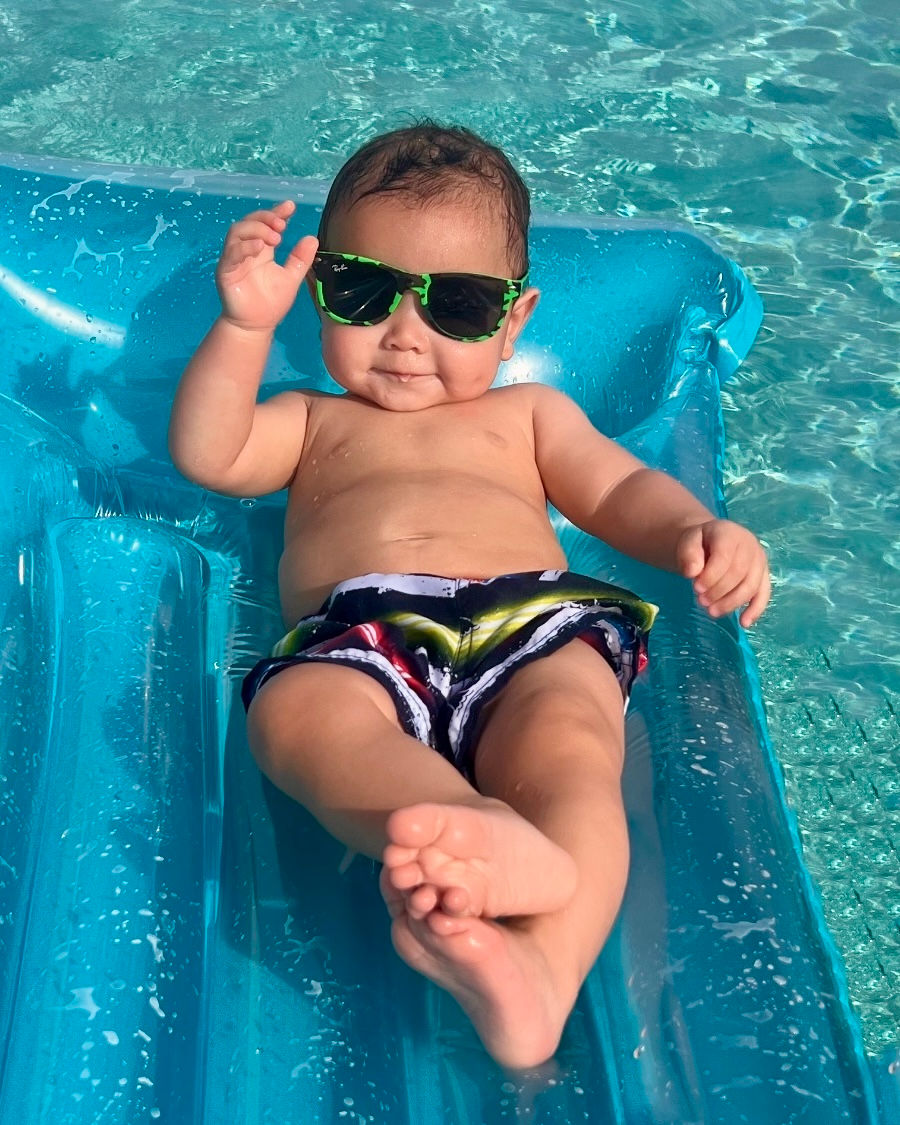
My son Lincoln is Wasian. His mother is Estonian, and I am Vietnamese. He was born into two cultures, two family histories, and two different ancestral worlds. As he grows, he will not simply inherit physical traits from both sides of his family. He will inherit stories, traditions, expectations, perspectives, opportunities, and ways of understanding the world.
That has led me to a hypothesis.
Could Wasian children have unique advantages for developing high intelligence in a globalized world?
Let me be clear from the beginning. This is my hypothesis as a father. It is not a scientific claim that Asians, Europeans, mixed-race children, or any other ethnic group are inherently more intelligent than another. Science does not support ranking ethnic groups by inherent intelligence, and modern genetics is far too complex to make simplistic conclusions based on race or ancestry. Genetic prediction itself becomes less reliable across different ancestral backgrounds, especially when researchers try to apply models developed in one population to people with different or mixed ancestry.
But intelligence is not developed in a vacuum.
Children grow inside environments.
They learn from the languages they hear, the questions they are encouraged to ask, the cultures they experience, the people around them, the expectations placed upon them, and the opportunities they are given.
That is where my hypothesis begins.
I don't believe Lincoln has the potential to become intelligent simply because he is half Vietnamese and half Estonian. I believe he may have access to an unusually powerful developmental environment because of the worlds he has the opportunity to experience.
And as his father, I see it as my responsibility to help him make the most of that opportunity.
My Son Will Grow Up With Three Languages
Lincoln will be raised with three languages: English, Vietnamese, and Spanish.
English will connect him to much of the world's modern education, technology, science, business, and international communication. Vietnamese will connect him to my family, my ancestry, my culture, and the generations that came before him. Spanish will give him access to another enormous linguistic and cultural world.
I don't believe speaking three languages automatically gives a child a higher IQ.
The research on multilingualism and intelligence is more complicated than that. Studies and meta-analyses on the so-called bilingual advantage have produced mixed results. Some reviews have found evidence for possible advantages in areas such as inhibition and cognitive flexibility, while others have concluded that overall effects are small, variable, and potentially influenced by factors such as publication bias, socioeconomic conditions, and differences between study designs.
But I find the debate itself interesting.
Even if multilingualism does not produce a universal IQ advantage, a child who regularly navigates multiple languages is still regularly navigating multiple systems of communication.
Different words.
Different sounds.
Different grammar.
Different cultural meanings.
Different ways of expressing emotion.
Different ways of showing respect.
Different ways of understanding family.
Recent quantitative work has continued to find evidence that bilingual children outperform monolingual children on executive-function tasks more often than chance, although researchers still emphasize that the specific conditions responsible for those differences need to be better understood.
For me, that is more interesting than a simplistic promise of a higher IQ score.
The real question is whether regularly moving between languages can help a child become more comfortable moving between different ways of thinking. I believe it can. And I intend to find out through the way I raise my son.

I Believe Cognitive Flexibility May Matter More Than an IQ Number
The more I think about intelligence, the less interested I become in a single number.
An IQ score can measure certain cognitive abilities under particular testing conditions. It can be useful. But a number cannot fully describe curiosity, creativity, adaptability, cultural awareness, emotional intelligence, resilience, judgment, or the ability to understand a problem from multiple perspectives.
The future may reward those abilities as much as it rewards traditional academic intelligence.
That is why cognitive flexibility has become central to my thinking about Lincoln's development.
Cognitive flexibility is broadly connected to the ability to adapt thinking, shift perspectives, and respond to changing situations. Research examining bilingual and multicultural experiences has explored whether regularly navigating multiple languages and cultural frameworks may contribute to some aspects of this flexibility, although the evidence is not uniform enough to make universal promises.
But as a father, I can see the potential in the idea.
A child who grows up in only one cultural environment may understandably assume that many things have one normal way of being done.
A child who grows up between cultures may learn something different.
There may be more than one way to greet someone.
More than one way to speak to an elder.
More than one way to celebrate a holiday.
More than one definition of success.
More than one way to organize a family.
More than one way to solve a problem.
Lincoln may grow up learning that context matters.
And I believe that lesson could be extraordinarily valuable.
Being Wasian Does Not Automatically Create an Advantage. Being Raised Across Cultures Might.
This is the distinction I think is most important.
I do not believe that simply being born Wasian automatically makes a child more intelligent.
A child does not receive an IQ upgrade at birth because one parent is Asian and the other is European.
That would be an oversimplification of both genetics and intelligence.
But I do believe that some Wasian children may grow up with access to a broader range of cultural experiences than they otherwise would.
The opportunity is not automatically inside the DNA.
The opportunity may be inside the environment.
A Wasian child may hear different languages.
Visit different countries.
Eat different foods.
Learn different family histories.
Understand different social expectations.
See different approaches to education.
Experience different ideas about independence and family responsibility.
The important word is not superiority.
The important word is exposure.
A child who actively engages with multiple cultures may have more opportunities to compare perspectives rather than assuming that one perspective is the only one.
That is where I believe something potentially powerful can happen.
East and West May Offer Different Tools for the Same Child
I am careful when discussing Asian and Western cultures because there is no single Asian culture and no single Western culture. Vietnamese culture is not Japanese culture. Estonian culture is not American culture. Europe itself contains enormous cultural diversity.
But cultures often develop different tendencies, values, and expectations.
In many Asian families, education, discipline, persistence, family responsibility, respect for learning, and long-term thinking can be strongly emphasized.
In many Western environments, individuality, creativity, questioning, independence, self-expression, and entrepreneurial thinking may receive greater emphasis.
Neither approach is automatically better.
But I find the possibility of combining strengths incredibly interesting.
What happens when a child learns discipline but is also encouraged to question?
What happens when a child learns to respect tradition but is also given permission to innovate?
What happens when a child understands family responsibility but is also encouraged to discover his own individual identity?
What happens when persistence meets creativity?
Perhaps that combination creates something more valuable than either extreme. Discipline without creativity can become rigid. Creativity without discipline can become unfocused.
I want Lincoln to understand both. I want him to have the patience to master something difficult and the confidence to ask whether it can be done differently.
Lincoln Will Be Homeschooled in an AI-Powered Educational Era
This is where my hypothesis becomes deeply personal. I do not intend to raise Lincoln inside a traditional one-size-fits-all educational system. My plan is for him to be homeschooled with artificial intelligence becoming part of his educational environment. I don't mean that I want AI to replace parenting. I don't want artificial intelligence to replace human teachers, family relationships, real-world experiences, or childhood. I want AI to become a tool. A powerful one.
The traditional education model generally places children into classrooms, teaches groups of students the same material, and moves through a curriculum according to a standardized schedule.
But children don't all learn at the same speed.
One child may understand mathematics immediately but struggle with writing.
Another may read years above grade level but need more time with abstract reasoning.
A child may become obsessed with astronomy for six months, history for the next six months, and engineering after that.
An AI-assisted curriculum has the potential to become more adaptive.
If Lincoln masters something quickly, I don't necessarily want him waiting for everyone else to catch up.
If he struggles with something, I don't want him left behind because the class has moved forward.
If he becomes fascinated by a subject, I want his education to go deeper.
Research into AI-supported personalized learning is expanding rapidly, including systematic reviews examining how AI techniques can support adaptive and personalized digital learning environments. The promise is significant, but it is important not to confuse potential with proof. AI-assisted education is not scientifically proven to turn children into geniuses, and the quality of the educational design will still matter enormously.
For me, the most exciting possibility is not automation.
It is personalization.
I Don't Want Lincoln to Memorize the World. I Want Him to Understand It.
The world Lincoln will inherit will be very different from the world I grew up in.
Information is no longer scarce.
A child can ask artificial intelligence a question that once would have required a library, a university, or years of searching.
That changes the purpose of education.
If knowledge can increasingly be retrieved instantly, perhaps the most important skills will involve knowing what questions to ask.
How do you recognize bad information?
How do you compare two competing ideas?
How do you identify bias?
How do you understand context?
How do you combine knowledge from different fields?
How do you use artificial intelligence without allowing artificial intelligence to think for you?
These are the questions I want Lincoln to grow up asking. I don't want him to compete with AI at memorization. I want him to understand how to work with AI while remaining independently capable of critical thought. Technology should expand his intelligence. It should not replace it.
The Wasian Advantage, If It Exists, May Be Environmental Rather Than Genetic
This is the sentence that best describes my entire hypothesis.
The Wasian advantage is not genetic superiority. It may be an environmental advantage.
Mixed ancestry gives every child a unique combination of genetic variation, but modern human genetics does not support simple racial categories as reliable predictors of complex traits such as intelligence. Research on polygenic prediction also demonstrates how difficult it is to apply genetic models fairly and accurately across different ancestry backgrounds.
That means I don't look at Lincoln and see a genetic formula for intelligence.
I see potential.
His potential may be influenced by his biology, just as every child's is.
But the environment around that biology matters.
Language matters.
Nutrition matters.
Sleep matters.
Education matters.
Relationships matter.
Curiosity matters.
Opportunity matters.
Culture matters.
Parenting matters.
My responsibility is not to assume that Lincoln was born intelligent enough.
My responsibility is to help create an environment where his individual abilities can develop as far as possible.
Raising Lincoln as a Steward, Not Just an Heir
There is another part of my role as Lincoln's father that matters deeply to me. I don't simply want to raise a successful child. I want to raise a steward. To me, stewardship means understanding that inheritance is not merely something you receive.
It is something you are responsible for.
A person can inherit wealth and lose it.
A person can inherit knowledge and fail to use it.
A person can inherit a family name and damage it.
Or a person can understand what previous generations built and find a way to improve it for the next generation.
That is how I want Lincoln to think about family. I want him to understand that values are inherited.
Knowledge is inherited.
Stories are inherited.
Relationships are inherited.
Opportunities are inherited.
And yes, wealth can be inherited.
But none of those things should simply be consumed. They should be understood. Protected. Improved. And eventually passed forward.
I want Lincoln to understand money, but I don't want money to become his identity.
I want him to understand wealth, but I also want him to understand responsibility.
Financial intelligence should be part of his education.
So should cultural intelligence.
So should emotional intelligence.
So should technological intelligence.
So should intellectual independence.
I Want to Raise More Than a Smart Child
The more I think about Lincoln's future, the less interested I am in raising a child who can simply score well on a test. Of course, I want him to learn. I want him to be academically capable. I want him to understand mathematics, science, history, technology, language, and the world around him.
But intelligence without judgment can be dangerous.
Intelligence without empathy can be destructive.
Intelligence without discipline can be wasted.
And intelligence without values can become empty.
My goal is bigger than a high IQ.
I want to help Lincoln develop intellectual intelligence, cultural intelligence, emotional intelligence, financial intelligence, and technological intelligence.
I want him to know how to think.
I want him to understand people.
I want him to understand money without becoming controlled by it.
I want him to understand technology without becoming dependent on it.
And I want him to understand his family's history without believing that the past controls his future.
My Son Will Live in a Global World
The world is becoming increasingly interconnected.
Business crosses borders.
Technology crosses borders.
Families cross borders.
Ideas cross borders.
Artificial intelligence is being developed by people from different countries and used by people around the world. The future will likely reward people who can understand different perspectives and communicate across differences. That is another reason I believe Lincoln's upbringing could become an advantage. He will grow up knowing that the world is bigger than one culture. English will connect him to one enormous global network. Vietnamese will connect him to his heritage and family. Spanish will connect him to another vast part of the world.
Being Wasian will give him a personal connection to both Asian and European ancestry.
And his education can be designed around helping him understand how all of these worlds connect. Perhaps the greatest advantage in the future will not belong to the person who knows the most. Perhaps it will belong to the person who can connect ideas that other people still see as separate.
Why I Believe Wasian Children Could Become Powerful Global Thinkers
This is where my hypothesis ultimately leads. A Wasian child may have the opportunity to become comfortable with complexity at an early age.
Identity can be complex.
Language can be complex.
Culture can be complex.
Family can be complex.
History can be complex.
Instead of simplifying those things, I want Lincoln to learn how to navigate them.
I want him to understand that two things can be true at the same time.
You can love your heritage while questioning parts of it.
You can respect tradition while creating something new.
You can belong to multiple cultures without being divided between them.
You can inherit family values without surrendering your individuality.
You can use artificial intelligence without surrendering your ability to think.
That, to me, is intelligence for the future.
My Hypothesis Is Really About Opportunity
I cannot predict Lincoln's IQ. No father can.
I cannot guarantee that speaking English, Vietnamese, and Spanish will make him smarter.
I cannot guarantee that homeschooling with AI will create an intellectual advantage.
I cannot guarantee that being Wasian will make him more creative, adaptable, or successful.
Science does not allow me to make those promises.
But I can give him opportunity.
I can expose him to languages.
I can teach him about his Vietnamese heritage.
I can make sure he understands his Estonian side.
I can encourage him to ask difficult questions.
I can personalize his education.
I can teach him how to use technology responsibly.
I can teach him how wealth is created, protected, and passed forward.
I can teach him that family is bigger than himself.
I can give him roots.
And I can give him room to grow. Perhaps that is the real advantage I am searching for. Not an advantage hidden inside his DNA. An advantage built around him through intentional parenting.
My Promise to My Wasian Son
Lincoln did not choose to be born Vietnamese and Estonian. He did not choose to become part of the Wasian generation growing up during the rise of artificial intelligence. He did not choose the languages he will hear during childhood. He did not choose the family history that came before him. Those choices belong to the circumstances of his birth.
But the choices he makes with those circumstances will eventually belong to him.
My role as his father is not to write his destiny.
It is to prepare him for the freedom to create his own.
I want him to become smarter than me in the ways that matter.
I want him to see opportunities I cannot see.
I want him to question assumptions I once accepted.
I want him to take what his family built and improve it.
And someday, if he becomes a father himself, I hope he gives his own children something even better.
That is stewardship.
That is legacy.
And perhaps that is the real question behind my hypothesis.
Could Wasian children have unique advantages for developing high intelligence in a globalized world?
My answer is not that they are automatically born smarter.
My answer is that some may be born into a remarkable opportunity.
An opportunity to understand multiple cultures.
An opportunity to speak multiple languages.
An opportunity to see the world through more than one lens.
An opportunity to combine the discipline of one tradition with the creativity of another.
An opportunity to grow up during the most technologically transformative period in human history.
And if parents intentionally build the right environment around that child, perhaps the possibilities become even greater. Lincoln will eventually show me whether my hypothesis was right. But for now, my job is simple.
Give him knowledge.
Give him culture.
Give him language.
Give him values.
Give him opportunity.
Teach him stewardship.
Teach him independence.
And then give him the freedom to become whoever he chooses to be. Because I don't want to raise Lincoln to become the smartest Wasian child. I want to raise him to become the best version of Lincoln. And I believe that may be the most intelligent goal of all.
FAQs
Are Wasian children naturally more intelligent?
There is no scientific evidence that being Wasian, mixed Asian, or mixed European automatically makes a child more intelligent. Intelligence is influenced by many genetic and environmental factors, and ancestry alone cannot determine an individual's IQ.
Could growing up with multiple languages help a Wasian child develop cognitively?
Research on multilingualism and executive function is mixed. Some studies find potential advantages in areas such as cognitive flexibility and inhibition, while other large reviews find effects that are small or inconsistent. Speaking multiple languages should not be viewed as a guaranteed IQ advantage, but multilingual development can provide meaningful linguistic and cultural opportunities.
Will speaking English, Vietnamese, and Spanish make Lincoln smarter?
No one can guarantee that speaking three languages will increase Lincoln's IQ. However, learning and using multiple languages can expose him to different linguistic systems and cultures and may contribute to certain cognitive and communication skills.
Is the “Wasian advantage” genetic?
Not in the sense of genetic superiority. My hypothesis is that any potential Wasian advantage may come more from environmental opportunities, including multicultural experiences, multilingual exposure, education, and access to multiple perspectives.
Can artificial intelligence improve homeschooling?
AI can potentially support personalized and adaptive learning by helping tailor educational content and pacing to an individual student. However, AI is a tool, not a guaranteed path to higher intelligence, and effective parenting, teaching, social development, and educational design remain essential.
What does cognitive flexibility mean?
Cognitive flexibility generally refers to the ability to adapt thinking, shift perspectives, and respond effectively when situations or rules change. Researchers have explored how bilingual and multicultural experiences may influence this ability, although findings vary across studies.
Can multicultural children become more creative?
Multicultural experiences may create opportunities for people to encounter and combine different perspectives, which researchers have linked to creativity under certain conditions. However, being multicultural alone does not guarantee greater creativity.
What is the best way to raise a Wasian child?
There is no single best method. I believe parents can help by encouraging children to understand all sides of their heritage, supporting language development, creating opportunities for meaningful cultural experiences, and allowing children to develop their own identity.
What does it mean to raise a child as a steward of family wealth?
To me, stewardship means teaching a child that wealth and opportunity are responsibilities, not simply possessions. The goal is to help the next generation understand how to create, protect, improve, and responsibly pass forward the resources and values they inherit.
What is the main idea behind the Wasian intelligence hypothesis?
The hypothesis is not that Wasian children are inherently smarter. It is that some Wasian children may grow up with unique developmental opportunities through multiple cultures, languages, perspectives, and educational experiences that could help them develop skills increasingly valuable in a globalized and AI-powered world.
Love This? Read about "How to Make a Baby with a Supermodel" by Linh Hoang

Comments