


Wasian Skin: What to Expect as Your Mixed Asian Baby Grows | A Parent's Complete Guide

Updated: Jul 14
by Linh Hoang, father & co-founder
One of the first questions parents ask after welcoming a Wasian baby into the world is surprisingly simple:
"What skin tone will my baby have?"
It's also one of the hardest questions to answer.
Unlike eye color or hair color, skin tone is influenced by dozens, if not hundreds, of genetic variations interacting with one another. Add two completely different ancestral backgrounds together, and the possibilities become almost endless.
As the father of a Wasian son, I've experienced this curiosity firsthand. Lincoln's mother is Estonian supermodel with blonde hair and blue eyes. I'm Vietnamese with naturally black hair and brown eyes, yet because I carry recessive genes, our son is currently on track toward what appears to be strawberry blonde hair and green-hazel eyes. Watching his phenotype evolve has reminded me that genetics rarely follow simple expectations.
The same is true for skin.
There Is No "Typical" Wasian Skin Tone
One of the biggest misconceptions about mixed Asian children is that they all develop the same complexion.
They don't.
Two siblings with the exact same parents can have noticeably different skin tones.
One child may inherit a porcelain complexion with pink undertones.
Another may develop warm olive skin.
Another may tan easily while a sibling burns more quickly.
This incredible diversity is exactly what makes the Wasian community so unique.
Rather than existing somewhere exactly halfway between East and West, every child develops their own individual combination of inherited traits.
How Genetics Influence Skin
Skin color primarily comes from melanin, the pigment produced by specialized cells known as melanocytes.
Every person has roughly the same number of melanocytes.
The difference lies in how much melanin those cells produce and how that pigment is distributed throughout the skin.
Because dozens of genes contribute to pigmentation, predicting skin tone is significantly more difficult than many parents realize.
A child may inherit:
• Fair European pigmentation with Asian facial features.
• Warm olive skin with lighter eyes.
• Medium golden skin with blonde hair.
• Light skin that tans deeply during summer.
• Porcelain skin that remains fair year-round.
Nature mixes genetics rather than averaging them.
How Wasian Skin Changes During Childhood
One thing many parents notice is that newborn skin rarely predicts adult skin.
Babies often appear:
• Red immediately after birth.
• Pink during infancy.
• Pale during the first few months.
• More golden as melanin develops.
• Slightly darker during toddler years.
• More stable after early childhood.
Sun exposure, hormone changes, growth, and natural melanin production all influence how skin develops over time.
Many Wasian parents are surprised when their child appears significantly different at age five than they did at six months old.
That is perfectly normal.
Lincoln's Journey
Watching Lincoln grow has made me appreciate how dynamic genetics really are.
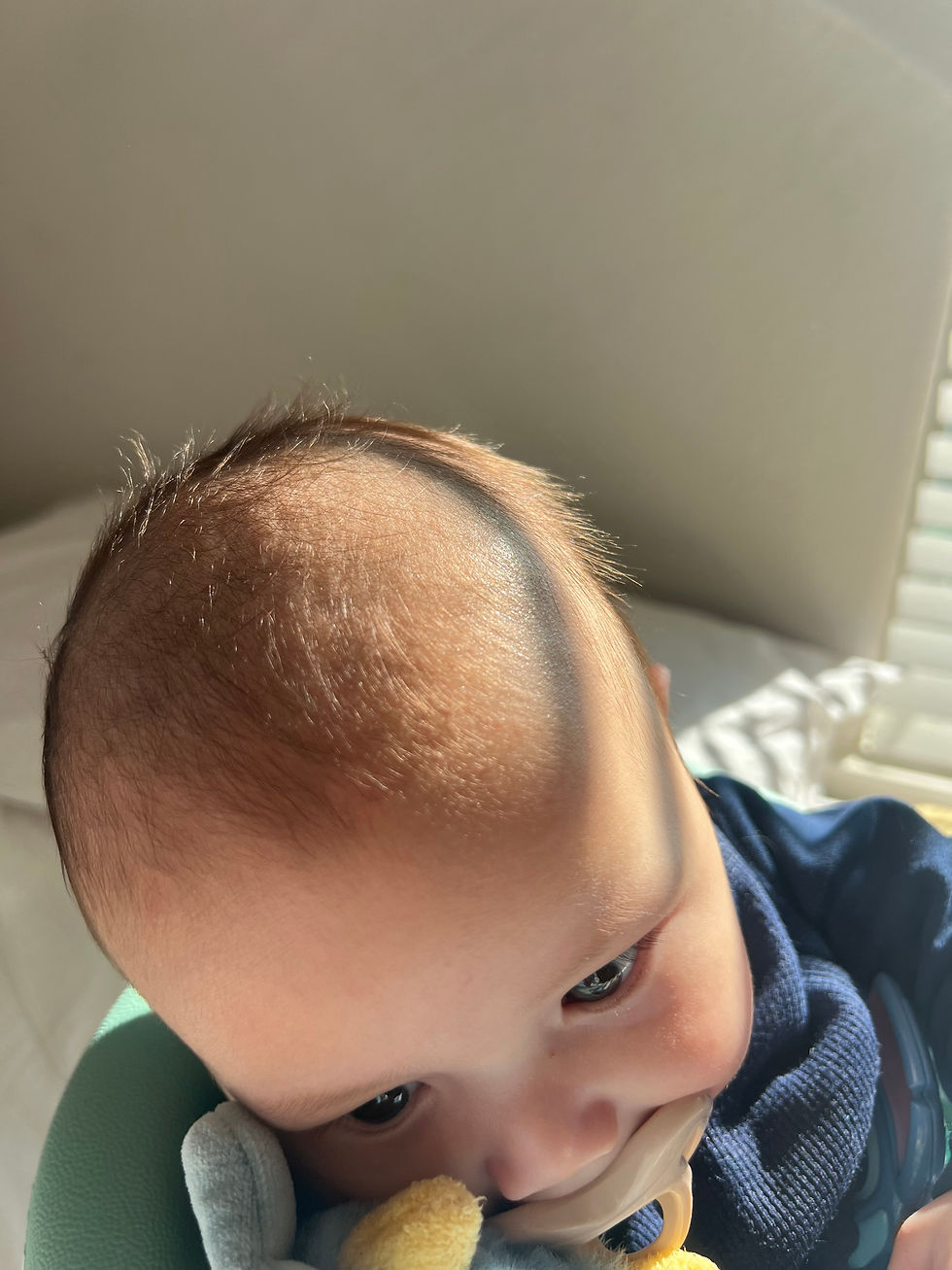
From birth, his complexion appeared lighter than many expected. Combined with nearly invisible blonde eyebrows, reflective gray newborn eyes, and reddish-brown hair, there were early clues that his pigmentation would continue evolving.
Rather than becoming darker over time, everything has gradually become lighter.
His hair has shifted toward golden strawberry tones.
His eyes continue progressing toward green-hazel.
His complexion has remained balanced, carrying both warmth from his Vietnamese heritage and lighter pigmentation inherited from his Estonian side.
Every month reinforces the same lesson.
Genetics doesn't simply split the difference.
It creates something entirely new.
Common Wasian Skin Undertones
Many Wasian children develop undertones that differ from their overall skin color.
Common undertones include:
Undertone | Common Appearance | Often Seen With |
Neutral | Balanced ivory or beige | Both European and Asian ancestry |
Warm | Golden, peach, honey | Southeast Asian heritage |
Cool | Pink, rosy, porcelain | Northern European ancestry |
Olive | Green-gold complexion | Mediterranean or East Asian combinations |
Undertones often become more obvious as children grow.
How the Sun Affects Wasian Skin
Sun response varies enormously.
Some Wasian children:
• Burn easily.
• Tan beautifully.
• Freckle.
• Develop golden skin during summer.
• Hardly change at all.
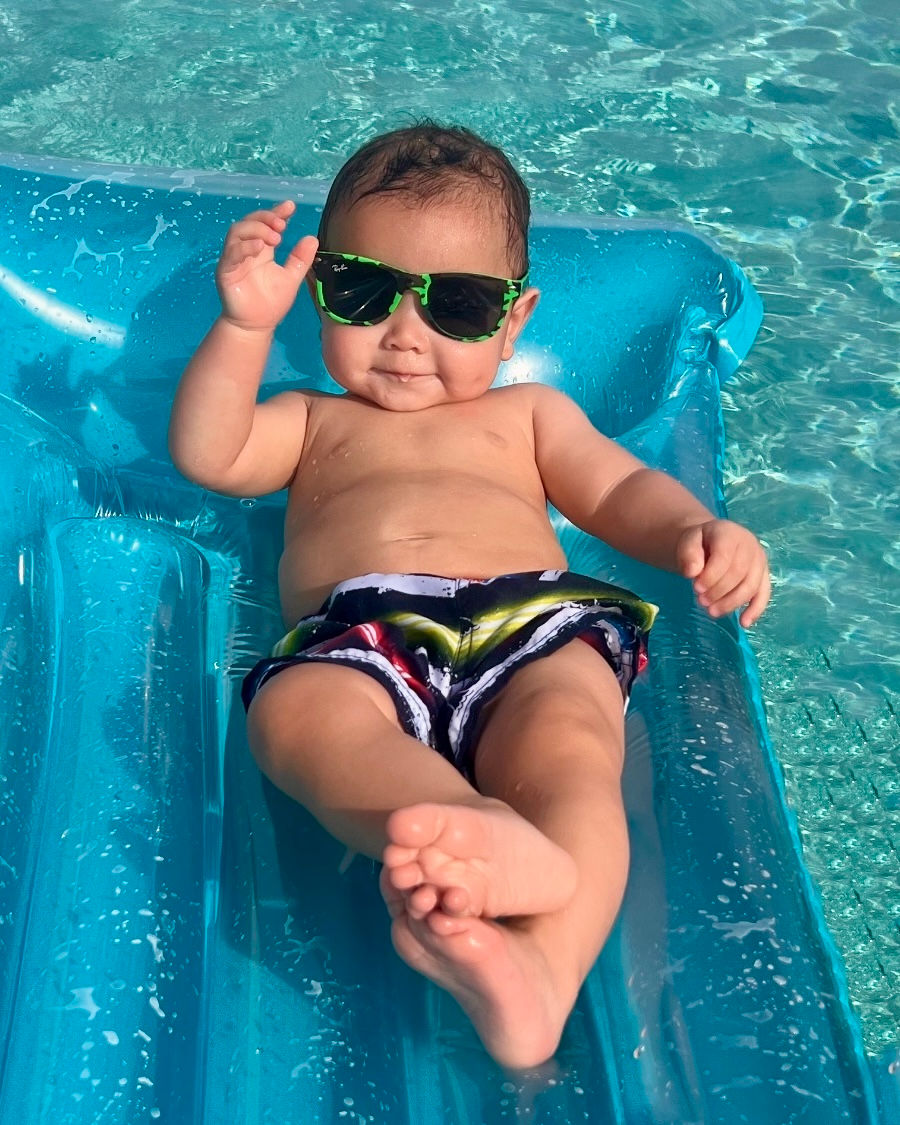
Lincoln, for example, spends significant time outdoors in the Caribbean, and the tropical sunlight has enhanced his hair color while giving his complexion a healthy golden glow without dramatically changing his natural undertones.
Every child responds differently depending on inherited pigmentation.
Daily Skin Care for Wasian Babies
Fortunately, caring for Wasian skin is not dramatically different from caring for any baby's skin.
Parents should focus on protecting the skin barrier while allowing natural development.
Basic recommendations include:
• Gentle fragrance-free cleansers.
• Daily moisturizing when needed.
• Mineral sunscreen for older babies and children following pediatric guidance.
• Protective clothing and hats during prolonged outdoor activities.
• Avoiding excessive sun exposure during peak UV hours.
Healthy skin begins with consistency rather than complicated routines.
How Skin Evolves Into Adolescence
As hormones increase during puberty, pigmentation can continue changing.
Some teenagers develop:
• Deeper summer tans.
• More freckles.
• Reduced redness.
• Slightly darker overall complexion.
• Greater contrast between facial features and skin tone.
For many Wasian children, adolescence is when their final skin tone begins settling into adulthood.
Celebrating Every Shade
Perhaps the most important lesson for parents is this.
There is no ideal Wasian complexion.
There is no "correct" amount of Asian or European appearance.
Every child inherits a one-of-one genetic masterpiece.
Some will resemble one parent.
Some will resemble the other.
Some, like Lincoln, may surprise everyone.
Watching his phenotype develop has reminded me that genetics are less about prediction and more about appreciation.
Every month brings new discoveries.
Every year reveals something different.
And every Wasian child tells a completely unique genetic story.
Comparison Chart: Common Wasian Skin Characteristics
Characteristic | Possible Outcomes |
Skin Tone | Fair, ivory, beige, golden, olive, medium |
Undertones | Neutral, warm, cool, olive |
Sun Response | Burn, tan, freckle, gradual bronze |
Infant Changes | Pink, pale, golden, darker with age |
Seasonal Changes | Summer tan, winter lightening, minimal change |
Long-Term Development | Continues evolving through childhood and puberty |
Final Thoughts
Being Wasian means embracing unpredictability.
Your child may inherit your smile, your partner's eyes, your grandmother's skin tone, or genetic traits that haven't appeared in generations.
That uncertainty is part of the magic.
As parents, we often search for answers about what our children will become.
Sometimes the better approach is simply watching the story unfold.
Lincoln has taught me that every stage of that journey is worth appreciating.
His genetics continue to surprise me, and I wouldn't have it any other way.
FAQs
What skin tone do most Wasian babies have?
There is no standard Wasian skin tone. Mixed Asian children can inherit a wide range of complexions depending on their family genetics.
Does Wasian skin change as children grow?
Yes. Skin tone often evolves throughout infancy, childhood, and puberty as melanin production naturally changes.
Why does my Wasian baby look lighter than expected?
Many babies are born with lighter pigmentation that gradually develops over time. Genetics from both parents also influence the final outcome.
Can Wasian babies tan?
Yes. Many Wasian children tan naturally, although their response to sunlight varies depending on inherited pigmentation.
Is sunscreen important for Wasian children?
Absolutely. Regardless of skin tone, protecting children's skin from excessive UV exposure is an important part of healthy skin care.
Do undertones matter more than skin color?
Undertones play a significant role in how skin appears under different lighting conditions and often influence overall complexion.
Can two Wasian siblings have different skin tones?
Yes. Siblings can inherit different combinations of pigmentation genes, resulting in noticeably different appearances.
Does hair color predict skin tone?
Not necessarily. Hair color and skin pigmentation are influenced by overlapping but distinct genetic factors.
Can Wasian children develop freckles?
Yes. Freckles are possible if the appropriate genetic traits are inherited, particularly from European ancestry.
Is every Wasian child genetically unique?
Yes. Every Wasian child inherits a unique combination of genes from both parents, making each phenotype truly one of a kind.


Comments