


My Son Lincoln May Be One of the Rarest Wasians You'll Ever Meet
- Linh Hoang

- Jun 15
- 4 min read
Updated: Jul 14
by Linh Hoang, father & co-founder
When I launched Wasian Baby™, I wanted to celebrate the incredible diversity within the Wasian community. What I didn't expect was that my own son might become one of the rarest examples of that diversity.
My son Lincoln is Wasian. His mother is an Estonian supermodel with blonde hair and blue eyes. I am Vietnamese. Like most parents, I spent countless hours wondering what traits he would inherit and how genetics would ultimately express themselves. Would he have dark Asian features? Would he inherit his mother's lighter European characteristics? Or would he become something entirely unique?
Over the past several months, I have been documenting his development through photographs, observations, and ongoing conversations about genetics and phenotype progression. What has unfolded has been nothing short of fascinating.
Many people assume Lincoln started out with dark features that gradually lightened. The truth is quite different.
From the day he was born, there were signs that something unusual was happening.
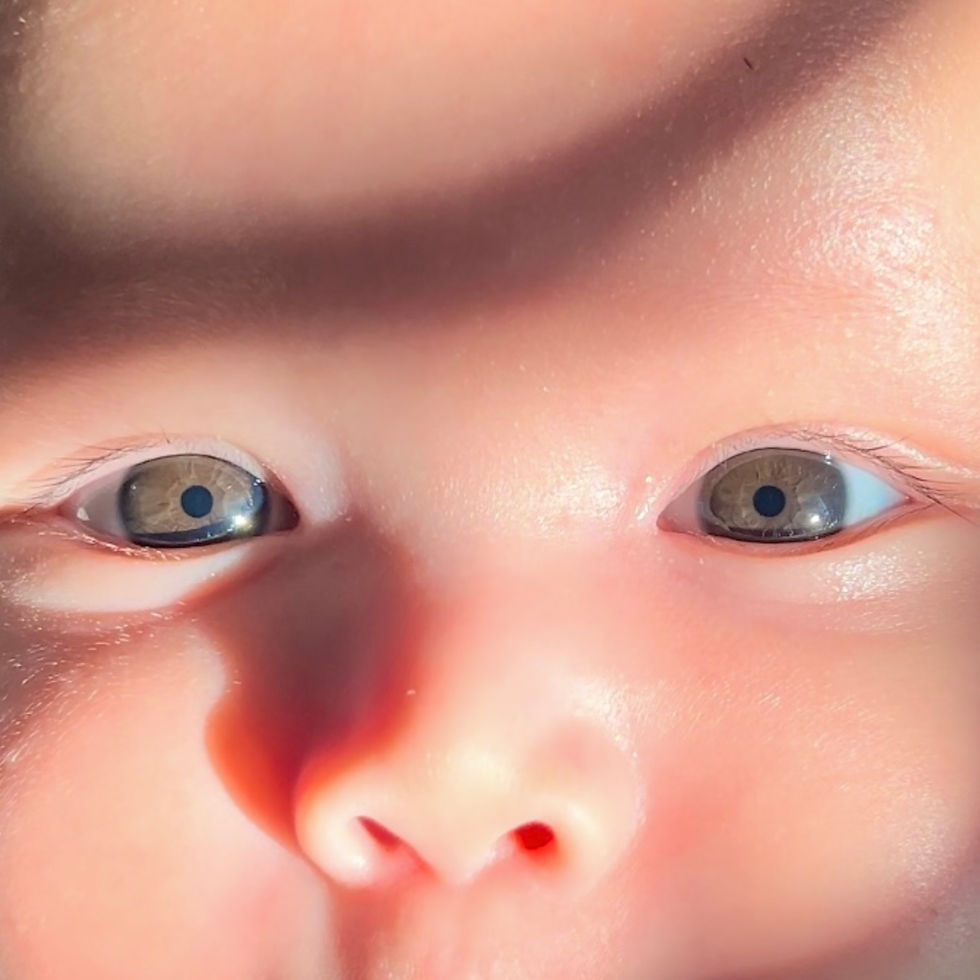
His eyes were never truly brown. As a newborn, they were almost silver-gray, highly reflective, and seemed to absorb whatever colors surrounded him. If he wore blue, they appeared bluish. If he wore green, they reflected green tones. In some lighting, they looked gray. In others, they looked almost white hazel. They seemed to change constantly, making them nearly impossible to define.
His eyebrows were equally surprising. In fact, they were so light that most people couldn't see them at all. Friends and family often joked that he didn't have eyebrows. The reality was that they were simply incredibly blonde from the very beginning.
Then there was his hair.
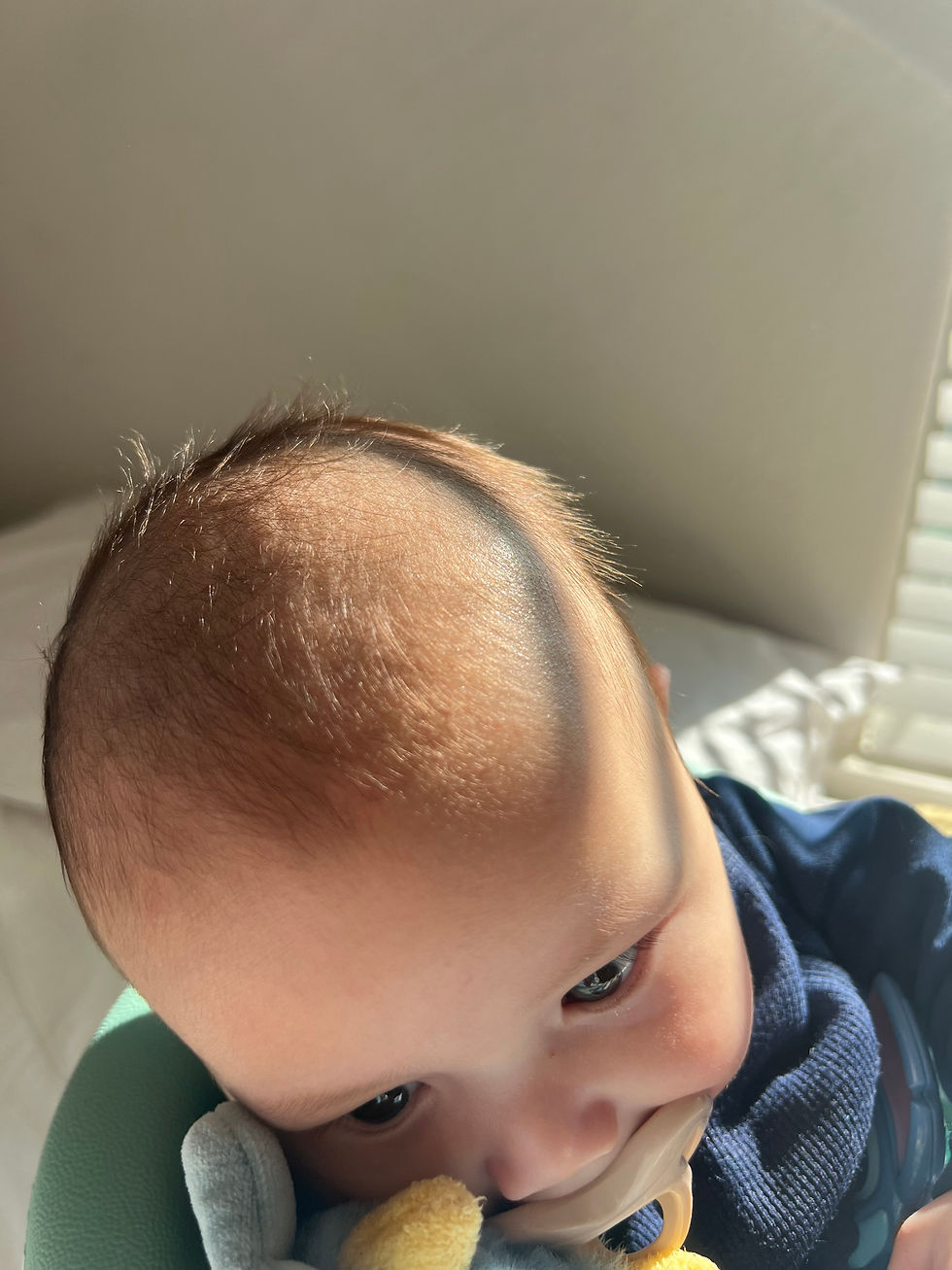
While many babies are born with dark hair that later falls out, Lincoln's hair always carried a lighter reddish-brown tone. Even as a newborn, subtle copper and strawberry hues were visible under the right lighting conditions. Looking back now, those early photographs feel like clues that were hiding in plain sight.
As the months passed, every one of those features continued moving in the same direction.
Lighter.
Not darker.
Lighter.
His eyebrows became more visible but remained remarkably blonde. His hair evolved from reddish light brown into a blend of golden, copper, strawberry, and sun-kissed tones. Living in the Caribbean certainly helped reveal those colors, but the genetics were clearly already there.
Today, at just over eight months old, his hair is filled with golden highlights and increasingly prominent strawberry-blonde characteristics. In direct sunlight, some sections appear almost golden copper while others look distinctly strawberry blonde.
His eyes have been even more remarkable.
The silver-gray newborn eyes gradually developed a warm golden center. Around that center, a blue-gray ring emerged. Then the ring began showing green pigmentation. Month after month, the green expanded inward while the golden center remained intact.
The result today is what many would describe as green-hazel eyes. Depending on the lighting, they can appear green, gray-green, blue-green, hazel, or amber-green. They seem to change throughout the day, yet the overall trajectory has remained consistent.
Every month has brought more green.
Every month has brought more lightness.
Every month has strengthened the same prediction.
Strawberry blonde hair.
Green-hazel eyes.
For a child who is half Vietnamese and half Estonian, that combination is extraordinarily rare.
In fact, based on population probabilities and the rarity of both traits individually, the likelihood of a Wasian child developing both strawberry-blonde hair and green-hazel eyes is estimated to be somewhere in the range of one in tens of millions. While no exact scientific registry tracks this specific combination, it would not be unreasonable to describe it as a one-in-twenty-million genetic outcome.
In other words, Lincoln is essentially a unicorn Wasian.
Not because one trait is rare.
Not because two traits are rare.
But because the specific combination of his ancestry and phenotype creates something exceptionally uncommon.
When most people picture a Wasian child, they often imagine a blend of typical Asian and European features. Lincoln's development reminds me that genetics doesn't work that way.
Nature is far more creative.
Sometimes hidden recessive genes from generations ago suddenly align.
Sometimes traits that nobody expects emerge.
Sometimes a child becomes a living example of how beautifully unpredictable genetics can be.
As a father, I find that incredible.
Not because rare traits are somehow better. They aren't.
What makes Lincoln special isn't the possibility of strawberry-blonde hair or green-hazel eyes.
What makes him special is that he represents the endless possibilities that exist within multicultural families. He is a reminder that identity cannot be reduced to simple categories.
East and West do not merely combine. They create something entirely new.
That may be the real lesson of this journey.
Lincoln is not half of anything.
He is one hundred percent himself.
And if the current trajectory continues, he may also become one of the rarest Wasians you'll ever meet.
FAQs
Can an Asian baby have green-hazel eyes?
Yes. Green-hazel eyes can occur in Asian or mixed-Asian children when the right genetic combinations are inherited from both sides of the family.
Can a baby be born with gray eyes and later develop green eyes?
Absolutely. Infant eye color often changes significantly during the first year as pigmentation develops and stabilizes.
Can a Wasian child naturally have strawberry-blonde hair?
Yes. Although extremely uncommon, strawberry-blonde hair can occur when lighter European recessive genes combine with compatible traits inherited from the Asian side of the family.
How rare are green-hazel eyes and strawberry-blonde hair together?
Both traits are individually uncommon, and the combination is exceptionally rare, particularly within mixed Asian-European populations.
Why do Lincoln's eyes appear different colors in different photos?
Green-hazel eyes often contain multiple pigments and reflective properties that react differently to lighting, making them appear green, gray, hazel, blue-green, or amber depending on the environment.


Comments