


What Does Wasian Mean? Identity, Culture, and the Wasian Generation

Updated: 3 days ago
By Linh Hoang, Father & Co-Founder of Wasian Baby
The word Wasian is becoming increasingly visible across social media, popular culture, entertainment, and conversations about modern identity. You may have seen it in a TikTok video, an Instagram caption, a celebrity interview, or a conversation about multicultural families. But what does Wasian actually mean? Who is considered Wasian, and why is an entirely new generation embracing this identity?
As the father of a Wasian child and the founder of Wasian Baby, these are questions that mean a great deal to me. I see the growing Wasian community as more than a social media trend. It represents a generation of people navigating multiple cultures, family histories, traditions, and perspectives while creating an identity that is uniquely their own.
My son Lincoln is Vietnamese and Estonian. I am Vietnamese, and his mother is Estonian supermodel. From the moment Lincoln entered my life, I began thinking more deeply about what it means to grow up between cultures, how children develop a sense of belonging, and how we can create a world where mixed-race children never feel they have to choose one side of their heritage over the other.
I believe the rise of the Wasian generation deserves to be understood, celebrated, and discussed.

What Does Wasian Mean?
Wasian is an informal identity term that combines the words White and Asian. It generally describes someone who has both White and Asian ancestry, often through parents or grandparents from different racial or ethnic backgrounds.
For example, a person with one Vietnamese parent and one European parent may identify as Wasian. The same term may describe someone with Japanese and White American heritage, Korean and British ancestry, Filipino and German roots, or Chinese and French family backgrounds.
The word is a simple combination, but the identities behind it can be incredibly diverse.
Wasian is not a formal racial classification, citizenship category, or biological designation. It is a cultural and social label that some people use to describe their mixed heritage. Some embrace the term because it gives them a convenient way to communicate their background. Others prefer to identify with their specific ethnicities, nationalities, or family cultures.
There is no single correct way to identify as Wasian. The most important factor is how individuals understand and describe their own heritage.
What Is a Wasian Person?
A Wasian person is generally someone with both White and Asian ancestry. However, being Wasian is about more than simply having parents from two different racial backgrounds.
It can involve growing up with multiple languages, celebrating different holidays, eating foods from different cultures, navigating different family traditions, and learning how to understand more than one cultural perspective.
Some Wasians grow up in households where both cultures are equally present. Others grow up primarily connected to one side of their family and discover the other side of their heritage later in life.
A Wasian person may speak Vietnamese at home, celebrate Christmas with European relatives, observe Lunar New Year with Asian family members, and grow up surrounded by traditions from both sides. Another Wasian person may have an entirely different experience.
There is no universal Wasian lifestyle or experience. Every family creates its own cultural environment.
For me, that diversity is one of the most meaningful aspects of this community. The Wasian identity does not require everyone to look alike, speak the same language, or share the same traditions. It creates space for people with different stories to recognize something familiar in one another.
Why Is the Word Wasian Becoming So Popular?
The growing popularity of the word Wasian is connected to several cultural changes, including social media, globalization, multicultural relationships, and greater visibility for mixed-race individuals.
For many years, people with mixed Asian and White ancestry did not always have a widely recognized identity label that felt natural to them. Some identified as biracial, mixed-race, Asian American, Eurasian, or by their specific ethnic backgrounds. Those terms remain meaningful, but Wasian has developed into a more recognizable expression of identity, particularly among younger generations.
Social media has helped accelerate this change.
Platforms such as TikTok and Instagram allow people to share their experiences with mixed heritage, family traditions, language, appearance, and cultural identity. Hashtags and online conversations have helped individuals discover others with similar backgrounds, sometimes for the first time.
The popularity of Wasian-related content also reflects a broader interest in multicultural representation. People are increasingly interested in seeing families, relationships, and identities that reflect the diversity of the modern world.
But I think something deeper is happening.
People are not simply looking for a word to describe their appearance. They are looking for a community where their experiences make sense. They want to feel represented without having to explain or defend every part of who they are.
That is one reason I believe the Wasian community will continue to grow in cultural visibility.
The Difference Between Being Wasian and Being Biracial
Wasian and biracial are related terms, but they do not mean exactly the same thing.
Biracial generally describes someone with ancestry from two racial groups. Wasian is a more specific informal term commonly used for someone with both White and Asian heritage.
A person with one Black parent and one White parent may identify as biracial, but would not generally be described as Wasian. A person with one Japanese parent and one White parent may identify as both biracial and Wasian.
The terms can overlap, but they communicate different levels of specificity.
Some people prefer the word biracial because it describes their racial background without emphasizing a particular combination. Others prefer Wasian because it reflects the specific relationship between their Asian and White heritage.
Neither term is more correct than the other. Identity is personal, and people should have the freedom to choose the language that best represents them.
What Does It Mean to Grow Up Wasian?
Growing up Wasian can be a unique experience because children may encounter different expectations, traditions, and cultural perspectives within the same family.
A child might have an Asian grandparent who speaks a language they do not understand, while another side of the family follows European traditions. They may look more like one parent, inherit characteristics from both, or find that their appearance changes as they grow.
They may also experience questions about where they are from, what they consider their culture, or which side of their family they identify with most.
Some mixed-race children feel completely comfortable moving between cultures. Others struggle with belonging, especially when they feel that they are not considered fully part of either community.
I believe parents have an important responsibility here.
Children should never feel that loving one side of their family means rejecting the other. They should not have to choose between being Asian or White, Vietnamese or Estonian, or one cultural tradition over another.
A child can embrace every part of their background without needing to rank those identities.
As a father, I want Lincoln to grow up understanding that his heritage is not divided. It is connected. His Vietnamese and Estonian backgrounds are both part of his family story, and neither should be treated as less important.
Wasian Babies: What Do Mixed Asian and White Babies Look Like?
One of the most common questions people ask about Wasian families concerns the appearance of their children.
What does a Wasian baby look like? Will the baby have Asian eyes and European hair? Can a mixed Asian and White baby have blonde hair, brown hair, green eyes, or blue eyes? Will the child resemble one parent more than the other?
The answer is that there is no single Wasian appearance.
Children inherit a combination of genetic variants from both biological parents. Traits such as hair color, eye color, skin pigmentation, facial features, and hair texture are influenced by multiple genes and can combine in many different ways.
A Wasian baby may have dark hair and brown eyes, blonde hair and blue eyes, or features that fall somewhere between the characteristics commonly associated with either side of the family. Some children may look more like one parent when they are born and develop a different appearance as they grow.
Even siblings with the same parents can look remarkably different.
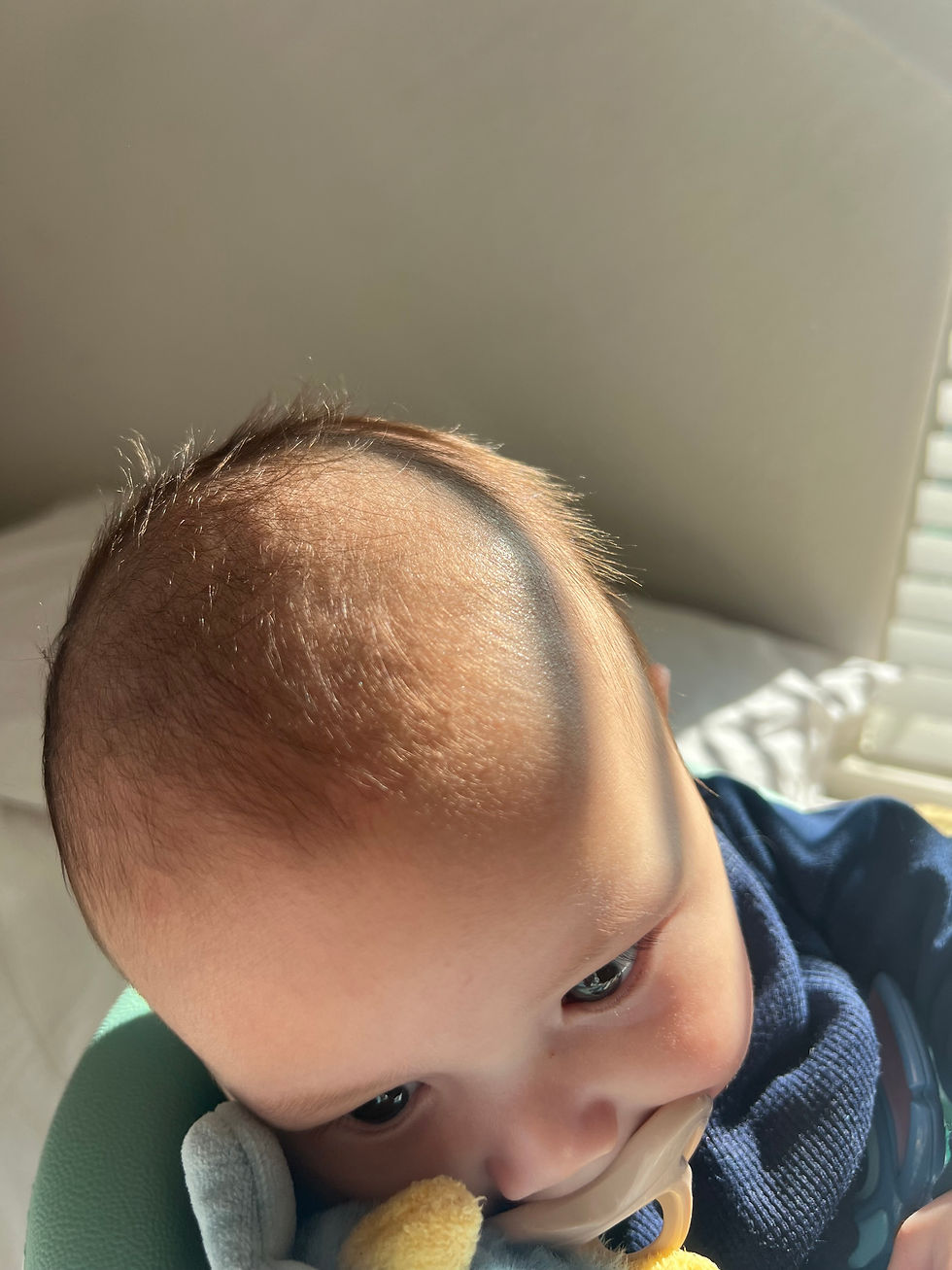
My son Lincoln is a personal example of how individual these combinations can be. His mother has Estonian heritage, blonde hair, and blue eyes, while I have Vietnamese heritage, black hair, and brown eyes. Lincoln's hair was initially reddish and light brown, and his eyebrows were so blonde that they were almost invisible. As he has grown, his hair has developed a dirty-blonde appearance with reddish tones that can look different depending on the lighting.
His appearance is his own combination of family genetics. It reminds me that children do not simply inherit a predictable copy of either parent.
Wasian babies are not expected to share one particular appearance. Their diversity is part of what makes every family's story different.
The Most Common Wasian Ethnic Combinations
Wasian identity includes many different combinations of Asian and White ancestry. The Asian side may include East Asian, Southeast Asian, South Asian, or other Asian backgrounds, while the White side may include European ancestry or other backgrounds understood within a person's own family and cultural context.
Vietnamese and White is one example. A child with Vietnamese and European parents may grow up connected to Vietnamese food, language, family traditions, and European customs.
Japanese and White is another recognizable combination. These families may bring together Japanese traditions, European heritage, and the cultural influences of the countries where they live.
Korean and White families are also part of the growing Wasian community. Their children may experience Korean family traditions alongside European or North American cultural influences.
Chinese and White, Filipino and White, Thai and White, Indian and White, and many other combinations also contribute to the diversity of mixed Asian and White families.
These combinations should not be treated as a complete list or as rigid categories. Asia is extraordinarily diverse, and every family has its own ethnic, national, linguistic, and cultural history.
The important point is that Wasian does not describe one specific ethnicity. It brings together people whose family backgrounds connect Asian and White heritage in different ways.
Wasian Culture: Creating an Identity That Belongs to Both Worlds
One of the most interesting questions about the Wasian generation is whether it has a shared culture.
I believe the answer is developing right now.
Traditional cultures are often passed from one generation to another through language, food, religion, holidays, family relationships, music, and community. Mixed families can bring multiple cultural traditions into the same household, creating opportunities for children to learn from different histories and perspectives.
But Wasian culture does not have to mean blending everything into one new tradition. It can also mean respecting the differences between cultures while allowing them to coexist.
A Wasian family might celebrate Lunar New Year, Christmas, Thanksgiving, and traditional European holidays. Children may learn to prepare Vietnamese dishes with one grandparent and enjoy European family recipes with another. They may grow up speaking multiple languages or develop an appreciation for cultures beyond their immediate ancestry.
For me, the future of Wasian culture is not about creating a replacement for Asian or European identity. It is about allowing people to embrace both without feeling that they must fit into someone else's definition.
The next generation will help determine what that culture becomes.
The Challenges of Mixed-Race Identity and Belonging
Although being part of a multicultural family can create meaningful opportunities, it can also come with challenges.
Some Wasians experience questions about their racial identity throughout childhood and adulthood. They may be asked where they are really from, told that they do not look Asian enough, or made to feel that they are not sufficiently connected to their White heritage.
Others may feel disconnected from a culture because they did not grow up speaking its language or participating in its traditions.
These experiences are not universal, but they deserve attention.
Identity should not be measured by someone's appearance, accent, language ability, or knowledge of cultural traditions. A person does not become less Vietnamese because they do not speak Vietnamese fluently. Someone does not become less connected to their
European ancestry because they were raised primarily in an Asian household.
Cultural connection can be developed throughout life. People can learn languages, reconnect with relatives, explore family history, travel, and participate in traditions at any age.
I want Wasian Baby to contribute to a world where mixed-race people do not have to prove that they belong.
You do not need permission to embrace your own family history.
Wasian Representation in Celebrities, Entertainment, and Pop Culture
Greater visibility in entertainment and popular culture has helped introduce the word Wasian to a much wider audience.
Actors, musicians, athletes, models, and online creators with mixed Asian and White heritage are increasingly visible in global media. Their presence can help audiences recognize the diversity of mixed-race identities and challenge older assumptions about how people from particular backgrounds should look.
However, representation should be about more than appearance.
A celebrity's mixed heritage does not automatically mean they identify as Wasian. People should be allowed to describe their own identities, and public figures should not be assigned labels simply because of their ancestry.
What matters is that mixed Asian and White individuals have opportunities to tell their own stories rather than having their identities defined for them.
Social media has made this especially important. People no longer need to wait for traditional entertainment companies to decide which stories deserve attention. They can create their own platforms, share their experiences, and build communities around shared interests.
I believe this independent visibility will play an important role in the future of Wasian representation.
Raising a Wasian Child: Why Both Cultures Matter
Becoming a father changed the way I think about heritage.
Before Lincoln was born, culture was something I associated with my own family, childhood, and Vietnamese background. After becoming a father, I began thinking about how much of that history I wanted to pass to the next generation and how I could make sure Lincoln also had a meaningful connection to his mother's Estonian heritage.
I do not want him to grow up thinking that he has two separate halves that must compete for attention. I want him to understand that both cultures are part of his identity.
That means making cultural traditions part of everyday family life rather than treating them as occasional activities. It means introducing him to family history, food, music, language, holidays, and the people who helped shape both sides of his family.
I also plan to raise Lincoln with three languages: English, Vietnamese, and Spanish. English will be important for global communication and education. Vietnamese will connect him with his paternal heritage and family history. Spanish will give him another language for communication and cultural connection across many parts of the world.
I believe children benefit when parents create opportunities to explore languages and cultures in meaningful ways. However, multilingualism is not a guarantee of higher intelligence or academic success. The value is also in communication, family connection, curiosity, and the ability to engage with people from different backgrounds.
Ultimately, I want Lincoln to have the freedom to decide how he relates to every part of his heritage as he grows older.
The Future of the Wasian Generation
The Wasian generation is growing up in an increasingly connected world. International relationships, multicultural communities, global education, and digital communication are creating more opportunities for people from different backgrounds to build families and share experiences.
As these families become more visible, the language used to describe mixed identities will continue to evolve.
Wasian may become even more widely recognized, or future generations may develop new words and expressions that better describe their experiences. Either way, the underlying conversation about belonging, identity, and representation will remain important.
I see an opportunity to build something meaningful around this cultural moment.
Wasian Baby was created to give multicultural families and people with mixed Asian and White heritage a place to find stories, information, conversations, and community. I want the platform to grow beyond a website that simply discusses what Wasian means. I want it to become a destination where people can explore their heritage, celebrate their families, share experiences, and feel represented.
For parents, it can be a place to learn about raising multicultural children. For Wasian adults, it can be a place to connect with others who understand aspects of their experience. For young people discovering their identity, it can be a reminder that they are not alone.
Most importantly, I want the community to welcome people without imposing a single definition of what being Wasian should look like.
Why I Created Wasian Baby
I created Wasian Baby because becoming Lincoln's father made me realize how many multicultural families could benefit from a community that celebrates their experiences.
There are countless families around the world bringing together different ethnicities, languages, histories, and traditions. Yet people with mixed backgrounds can still struggle to find spaces where their experiences are understood and represented.
I wanted to help create that space.
Wasian Baby is inspired by Lincoln, but its purpose extends far beyond my own family. It is for the parents raising the next generation, the adults exploring their mixed heritage, and the young people who want to see their identities reflected in the world around them.
I believe we should celebrate the things that make families different while recognizing the experiences that bring us together.
Being Wasian does not mean having to choose between Asian and White. It does not mean looking a certain way, speaking a particular language, or following a prescribed set of traditions.
It means having a family story that connects different backgrounds, with the freedom to decide what that story means to you.
As Lincoln grows, I hope he sees his Vietnamese and Estonian heritage as something to appreciate, not something he needs to explain or defend. I hope he grows up knowing that he belongs wherever he is loved, respected, and accepted.
And I hope Wasian Baby becomes part of a larger movement that helps the next generation feel exactly that way.
Our backgrounds may be different, but we all deserve to belong.
Frequently Asked Questions About Wasian Identity
What does Wasian mean?
Wasian is an informal term combining the words White and Asian. It generally describes someone with both White and Asian ancestry. The term is commonly used in conversations about mixed-race identity, multicultural families, and people with Asian and European heritage.
What is a Wasian baby?
A Wasian baby is a child with both White and Asian ancestry. A baby with one Asian parent and one White parent is one example. Wasian babies can have many different combinations of hair color, eye color, skin tone, and facial features because inherited traits vary from child to child.
Is Wasian the same as biracial?
Not exactly. Biracial generally describes someone with ancestry from two racial groups, while Wasian is a more specific informal term commonly used for people with White and Asian heritage. Someone can identify as both Wasian and biracial.
What ethnicities are considered Wasian?
Wasian can describe many combinations of Asian and White ancestry, including Vietnamese and White, Japanese and White, Korean and White, Chinese and White, Filipino and White, Thai and White, and Indian and White backgrounds. Individual identity labels are personal, and not everyone with these backgrounds chooses to identify as Wasian.
Why is Wasian becoming popular?
The term is becoming more visible through social media, multicultural relationships, entertainment, and greater representation of mixed-race individuals. Platforms such as TikTok and Instagram have helped people share their experiences, discover others with similar backgrounds, and build communities around mixed Asian and White identity.
Can someone be Wasian if they are only part Asian?
Yes. Wasian is an informal identity term, not a strict genetic classification. Someone with a combination of Asian and White ancestry may choose to identify as Wasian regardless of the precise proportions of their ancestry.
Do all Wasians look Asian and White?
No. There is no single Wasian appearance. Hair, eye color, skin pigmentation, facial features, and other physical characteristics vary widely. Genetics involves many inherited factors, so people with similar family backgrounds can look very different.
Can Wasians identify more strongly with one side of their heritage?
Absolutely. Some people feel equally connected to both sides of their family, while others identify more strongly with one culture because of their upbringing, language, family relationships, or personal experiences. There is no requirement to divide cultural identity equally.
What is Wasian culture?
Wasian culture is an evolving collection of experiences and traditions among people with White and Asian heritage. It can involve food, language, holidays, family traditions, art, music, and the experience of navigating multiple cultural backgrounds. There is no single Wasian culture that applies to everyone.
Where can Wasian people connect with a community?
Wasian Baby is a platform dedicated to celebrating mixed Asian and White heritage, multicultural families, Wasian identity, parenting, culture, and modern family life. Visit WasianBaby.com to explore stories, articles, and content created to help people feel represented and connected.


Comments